
Linguistic Society of South Africa
Dr Monicca Thulisile Bhuda
 Dr Monicca Thulisile Bhuda is an academic who received her PhD at age 29 from the North-West University in 2022. Dr Bhuda’s PhD is in Social Sciences with indigenous knowledge Systems. In 2013, The North-West University was the first Institution in Africa to establish a degree named the Bachelor of Indigenous Knowledge Systems (B.IKS) and Dr Bhuda was one the first intake. In 2017, Dr Bhuda graduated from the B.IKS programme with distinction and was the only one amongst the BIKS graduates to get a distinction, making her the first cum laude recipient of the IKS programme in Africa. In 2019, Dr Bhuda obtained her Master’s degree in Indigenous Knowledge Systems (M.IKS) also with a distinction. In 2022 Dr Bhuda became the first to graduate for a PhD amongst the 2013 B.IKS cohort of the North-West University. Therefore, Dr Bhuda is the first output of the B.IKS programme to make it to a PhD level. At the University of Mpumalanga, Dr. Bhuda lectures on Culture and Heritage with an emphasis on indigenous Knowledge Systems. She also coordinates a mandatory programme on African history and heritage which is for first-year students.
Dr Bhuda has published 30 academic articles since 2020 with a focus on indigenous Knowledge Systems. She has published 2 conference proceedings, 7 book chapters and 18 academic journals. She has further presented 35 abstract papers in different conferences, focusing on Indigenous Knowledge Systems as a multi-disciplinary field and presented on Indigenous languages. Dr Bhuda’s research contributes to the bodies of knowledge that recognise the contribution of indigenous knowledge in the contemporary society. Her research contributes to IKS preservation, protection and preservation. The work of Dr Bhuda on Indigenous Knowledge Systems is aligned with the Department of Science and Innovation’s, IKS policy of 2004 and IK Act of 2019.
Dr Bhuda is also a children’s author and in 2021, she wrote a Ndebele children’s book titled: Umgwalo Bobukgwhari bakaKwekwezi. In English, the translated version of the book is as follows: Kwekwezi’s cultural mural art. The Ndebele children’s book speaks of how Ndebele young girls become painters and she has been inspired by the works of women like Esther Mahlangu, Sophy noSinky Mahlangu and Francinah Ndimande who are Ndebele mural artists. Dr Bhuda is also a multi award winning academic with 2 awards received in 2023. She was awarded by the South African National Heritage Council (NHC) under the category of Voice of heritage. The North-West University in 2023 also awarded her with an alumni excellence award within the education category. In 2021, Dr Bhuda was declared a national expert of Indigenous Knowledge Systems (IKS) by the Minister of Sport, Arts and Culture in the republic of South Africa and she served as a youngest member in a national panel of experts that advised the Minister. She has been featured numerous times on TV, radio and newsletters as an IKS expert.
Dr. Napjadi Letsoalo
 Dr. Napjadi Letsoalo, a senior lecturer at the University of South Africa, with a PhD in Linguistics. His research focuses on paremiology, indigenous languages and gender, language development, and youth registers. He was recognized as the Young Linguist of the year by the Linguistics Society of Southern Africa in 2017. In 2018, he received the Best Paper award at the Language, Literature, and Linguistics International Conference in Singapore. In 2019, he was honored with the Excellence Award in Tuition by the University of South Africa, followed by winning the best paper award at the National Institute for the Humanities and Social Sciences doctoral conference in 2020. Further, in 2022, he clinched the Best Digital Humanities Collection: Community Engagement and was a finalist in the Mail & Guardian 200 Young South Africans. Recently, in 2024, he was awarded the Pan South African Language Board Multilingualism Award in the Youth Category. Dr Napjadi Letsoalo is currently the Chair of the Department of Linguistics and Modern Languages, University of South Africa.
Mr Papi Lemeko
 Mr. Papi Lemeko is a dedicated scholar specializing in Language Practice, with a focus on Intercultural Studies and Onomastics. Holding a Master of Communication in Language Practice from Central University of Technology, Free State. Mr Lemeko has contributed significantly to the academic community through research publications: The influence of Afrikaans on naming among the Basotho of South Africa and Online Teaching and Learning Experiences of Higher Education Lecturers and Students in the COVID-19 Era: A Leap to Digital Pedagogies?
In addition to research, Mr Lemeko is committed to education and fostering a collaborative academic environment. Their teaching philosophy emphasizes that all children are unique and must have a stimulating educational environment where they can grow physically, mentally, emotionally, and socially. It is my desire to create this type of atmosphere where students can meet their full potential. I will provide a safe environment where students are invited to share their ideas and take risks.
Mr Lemeko continues to push the boundaries of Language Practice and Media Studies striving to make impactful contributions to both academic knowledge and practical applications in terminology development.
Ms Nthabi Malatji
 Ms Nthabi Malatji is a Sepedi Lecturer at the University of Limpopo, where she has been teaching since 2016. She supervises research for honors and master’s students and has published articles in various accredited journals. Nthabi actively contributes to several educational projects, including the Kagiso Trust Project, the Barongwa Research Project, and PrimTEd (Primary Teaching Education). She serves as an assistant coordinator for the University of Limpopo’s School of Education Research and the Department of Language Education Research. In addition, Nthabi is an external moderator, examiner, and research external for other universities, as well as a reviewer for various journals. Currently pursuing her PhD in African Languages, she has presented papers at numerous conferences, both nationally and internationally.
Mr Jacob Thamaga
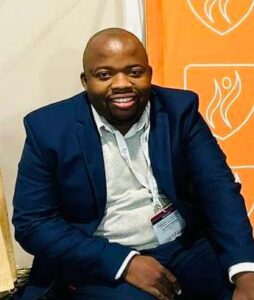 Mr Jacob Thamaga completed his BA Degree in Media Studies (2011) and Masters Degree in Translation Studies and Linguistics (2014) with the University of Limpopo. He also acquired a Postgraduate Diploma in Sports Development and Peace from the University of the Western Cape (2017). He’s currently studying for a PhD in Linguistics at the University of the Western Cape. Thamaga’s interest is in the following sub-fields of Linguistics; Linguistic Landscapes/Applied Linguistics, Sociolinguistics, Translation, Language & politics, Language attitude, Language standardization, Language policy & planning, Terminology Development & Lexicography, and African language development. In terms of employment, Thamaga serves as the Manager of the African Languages Development Unit at the Vaal University of Technology. He was at the forefront of the language policy review of VUT and eventually led the implementation project as the Manager of the Unit. He has more than five years of service within the student support environment and he won best mentor and best administrator awards at the University of Limpopo- Centre for Academic Development. He has presented around five (5) keynote addresses invited by The Department of Arts and Culture National, Arts and Culture Gauteng Provincial Government and PanSALB Gauteng. He also presented six (6) papers at national/international conferences and he also published one journal article which is DHET accredited. He published one article in the Mail & Guardian and he was featured in more than five (5) articles in the VUT internal publications. Thamaga is the founder and Director of Makgwathane Language Solutions company. He is currently serving in several boards as follows: Treasurer of the Board of VUT FM Radio Station, and Treasurer of the Board of Volleyball South Africa. He served as the PR and Media Director of Volleyball South Africa for two terms.T
Mr Thabang Molatou
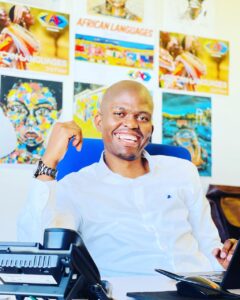 Mr Thabang Molatou has MA: African Language Studies from University of the Western Cape, B: Tech and N.Dip: Language Practice from Central University of Technology. He is a Language Practitioner at VUT and also affiliated with the Community of Practice for the Teaching and Learning of African languages inf Higher Education.
Dr Xolani Khohliso
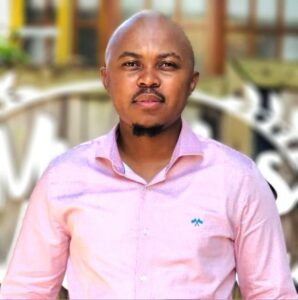 Dr Xolani Khohliso is the Director for Curriculum and Academic Staff Development Unit and the Head for Scholarship of Teaching and Learning. He holds a PhD in Curriculum Studies, M. Ed in Language & Media Studies, B. Ed Honours in Curriculum Studies, B. Ed in Senior, and FET Phase (UKZN) and Various Courses including; Higher Certificate in Information Technology, Certificate in Advanced Labour Law (UKZN), Certificate in Project Management (UP), Certificate in Monitoring and Evaluation (UP), Certificate in Public Sector Audit and Governance (UCT), Certificate for entry into the Senior Management Services (National School of Governance), etc. His research and teaching interests are in African Languages Pedagogy, Second Language Acquisition and Curriculum development and Assessment in Higher Education. He is a member of SACE, SAALT, ALTA, ILAF and ALASA. He supervises postgraduate students (Masters and PhDs) and currently teaching Assessment in Higher Education in Postgraduate Diploma in Higher Education Qualification. He is an advocate for African Languages as Languages of scholarship, teaching & learning, research and communication. He is engaged in governance structures, currently serving as Council Member at the University of South Africa; chairing, Academic Student Affairs Committee of Council, Member of SECOC, Member of HRCOC, Senate Member, Member of EXCOC, Deputy President of Humanities & Social Sciences Alumni Association, Board Member of McCord Provincial Eye Hospital. He previously served as a Council member in a position of a Deputy Chairperson of Thekwini TVET College Council, chairing Planning and Resource Committee, Student Support Governance Committee, Member of Academic Board, Member of EXCO and Member of ITC committee as well as other various organisations.
Prof. Tebogo J. Rakgogo
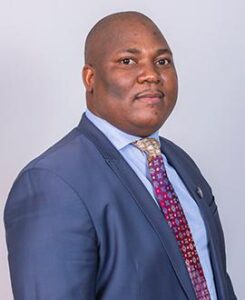 Prof. Tebogo J. Rakgogo is a social scientist whose scholarly work has been recognised by the National Research Foundation (NRF), where he was awarded a Y2 rating category. He currently serves as an Associate Professor and Head of the Department of Applied Languages at the Tshwane University of Technology (TUT). He possesses a Diploma, B-Tech, and a Master’s Degree in Language Practice from Tshwane University of Technology. In addition, he holds a Postgraduate Certificate in Education (PGCE), an Honours Bachelor of Education in Educational Management, and an Honours Bachelor of Arts in Translation Studies from the University of South Africa (Unisa). He completed his PhD in Onomastics at the University of the Witwatersrand, Johannesburg. His research interests span: Sociolinguistics, Onomastics, Dialectology, Historiography, Language and Law, Language and Politics, as well as Language Planning and Policy. He has authored and published over 20 articles in DHET-accredited journals and presented more than 40 papers at both local and international conferences. He serves as an external examiner for Wits University, the University of Johannesburg, the University of Pretoria, the University of Limpopo, the Central University of Technology, the University of the Western Cape and the National University of Lesotho. He contributed to language authorities as a member of the Sesotho sa Leboa National Language Body (PanSALB sub-structure) and served on the Board of Directors for the Sesotho sa Leboa National Lexicography Unit (PanSALB sub-structure). He is an active participant in TUT’s governance structures, being a member of Campus Management Committee (CMC), Senate, and Institutional Forum, where he has served as the Chairperson. He previously served as the President of the Humanities and Social Sciences Alumni Association within the framework of the National Institute for the Humanities and Social Sciences (NIHSS). He has been appointed to serve on the DHET Review Panel on the implementation of the Language Policy Framework for Public Higher Education Institutions. He is the Deputy Chairperson of the African Languages Association of Southern Africa (ALASA) Board. He is one of the founding members of the Linguistic Society of South Africa (LSSA). Lastly, he chaired the National Terminology Policy Steering Committee instituted by the Department of Sport, Arts, and Culture.
Prof Dumisani Sibiya
Prof Dumisani Sibiya is an award-winning novelist, short story writer and a poet. He has written and edited a number of books in IsiZulu. These include novels like Kungasa Ngifile (2002), Ngidedele Ngife (2007), Ngiyolibala Ngifile (2010), and Inkululeko Engakhululekile (2020), and short story collections and anthologies such as Imikhizo (2004), Sidla Ingqatho Nefutho (2007), Isiqongo (2007), Izinzulu ZikaZulu (2009), Izinyembezi (2003) and Seventh Street Alchemy (2006). He has also authored grammar textbooks such as My Clever IsiZulu Esimnandi series; and collections of poetry such as Zibuyil’ Emasisweni (2006), Senz’ Okwethu (2006), and Izinyosi (2007), ISibusiso Nezinyembezi (2019). He has also published children’s literature series called Vuma Levels 3-12 and a collection of Zulu proverbs and sayings tracing their origins in the volume called, Isilulu Senzulu KaZulu (2019). His collection of old and new traditional stories, Phinda Ungixoxele (2020), is an interesting read.
Sibiya is the three times winner of the Sanlam Prize for Youth Literature for his novels Kungasa Ngifile, Ngidedele Ngife and Ngiyolibala Ngifile respectively. The latter novel was also awarded the K Sello Duiker Memorial Literary Award during the 2011 South African Literary Awards (SALAs). He is also the second prize winner of the Muntu Xulu Award for Short Stories for his first collection of short stories titled Imikhizo in 2005. With his collection of poems, ISibusiso Nezinyembezi won the UJ Prize for Creative Writing in 2021. Sibiya is also a recipient of the following academic excellence awards at the University of the Witwatersrand: Kagiso Publishers – Isaac Moepuli Memorial Award (1998), ISMA – Maurice Flior Award (1998), Postgraduate Merit Award (1999) and the Vilakazi Memorial Award (1999). In addition, Sibiya received the following scholarships and bursaries for his undergraduate and postgraduate studies: Murray & Roberts Bursary Scheme (1996), Harold & Doris Tothill Bequest Fund Scholarship (2000), Mellon Postgraduate Mentoring Scheme (2000), NRF (2001), the prestigious Dr TW Kambule Growing Our Own Timber Programme (2001-2004) and the NIHSS-SAHUDA DOCTORAL SCHOLARSHIP (2018-2020).
Sibiya holds an MA in Publishing Studies from the University of the Witwatersrand, which he passed with distinction. He taught as a junior lecturer at the same university between 2001 and 2004. He has more than seven years’ experience as an editor and publisher at different leading publishing houses in South Africa. He holds a PhD from the University of Johannesburg and he is currently an associate professor in the same institution’s Department of African Languages. He has published several journal articles and book chapters, including a chapter in Mafela, MJ and CD Ntuli’s (eds) Issues of Indigenous African Literature and Onomastics: A Festschrift in Honour of DBZ Ntuli (2018) and another in Professors Sarah Chiumbu and Gilbert Mothaatsebe’s Radio, Public Life and Citizen Deliberation in South Africa (2021) and has co-edited collections of critical essays titled, Trends and Tropes: Some Aspects of African Indigenous Literature of South Africa (2022) and Broadened Horizons: African-Language Literature, Film and Creative Media in South Africa (2024).
Mr Sinoyolo Nokutywa
 Mr Sinoyolo Nokutywa is Manager: Languages and Indigenous Knowledge System under Directorate of Transformation and Languages at Walter Sisulu University. His research interest is on African Languages and Social Media, Oral Literature, Sociolinguistics and Applied Language Studies and his publications & postgraduate supervision is on the above-mentioned areas. He holds BA Hons and MA from Nelson Mandela University, BA Hons and PGCE from Walter Sisulu University. He is currently PhD candidate at Stellenbosch University and novice researcher. He is an author of five literature books in isiXhosa and accredited translator.
Dr Moffat Sebola
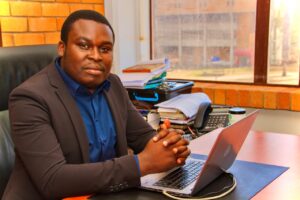 Dr Moffat Sebola serves as a Senior Lecturer of Tshivenḓa in the Department of Languages at the University of Limpopo, where he co-ordinates the Tshivenḓa Discipline and the Master of African Languages Programme. He holds a Bachelor of Arts in Information Studies, Bachelor of Arts (Honours in Tshivenḓa Cum Laude), Master’s degree in African Languages and a PhD (Tshivenḓa), all from the University of Limpopo.
Dr Moffat Sebola has published over 40 journal articles in both local and international journals. He has also published five book chapters in academic books. He was awarded as the best upcoming researcher in the School of Languages and Communication Studies at the University of Limpopo’s Vice Chancellor’s Annual Excellence Awards, and as the best emerging researcher in African languages by the African Language Association of Southern Africa (ALASA). He currently serves as the Sub-Chair of the Humanities and Social Sciences Alumni Association (HSSA) in the Northern Corridor (University of Limpopo and University of Venda), and as a reviewer of creative outputs for the Department of Higher Education and Training (DHET) in South Africa. His key areas of research interest include: folk poetry, identity, cultural astronomy, linguistics, onomastics; folklore and language policy, with a predominant focus on African languages and African-language literatures. He largely relies on Tshivenḓa literature as a representative sample of how African-language literatures encapsulate aspects of selfhood, culture and philosophy. He currently serves as a Section Editor of the Southern African Journal for Folklore Studies and a peer reviewer manuscripts for various DHET-accredited journals.
Dr Yanga LP Majola
 Dr Yanga LP Majola is a National Research Foundation (NRF) Y2-rated Researcher and Academic Manager for the Faculty of Humanities (Mbombela Campus); he is also an Applied Linguistics Lecturer in the Department of Applied Languages at Tshwane University of Technology (TUT). In addition to that, he is a trustee of the TUT Pension Fund Board, a member of the TUT Institutional Forum (IF) and the Secretary-General and Executive Committee Member of the Names Society of Southern Africa (NSSA), in addition to that he is a general member of the African Languages Association of African Languages (ALASA) and South African Translators Institute (SATI). He has also worked as a Translation Studies Lecturer at the Central University of Technology (CUT). He holds a National Diploma, Baccalaureus Technologiae, and a Magister Technologiae in Language Practice from TUT. He completed his Ph.D. in African Languages and Linguistics (Sociolinguistics) at the University of the Witwatersrand, Johannesburg. He also holds a Postgraduate Diploma in Higher Education from Rhodes University. His teaching and research interests and focus are applied linguistics, language policy and planning, computational linguistics, digital humanities, sociolinguistics, isiBhaca, dialectology, and onomastics. He has published over 11 articles and book chapters in DHET-accredited journals and continues to publish and review papers from various. He has supervised and co-supervised six master’s students to graduation and is currently supervising over eight postgraduate students and assesses Masters and Doctoral studies from many universities in South Africa, and has presented papers at local and international conferences, in South Africa, Africa and abroad. As a student, he served as a Treasurer General of the Institutional Student Representative Council (ISRC) for two consecutive terms and as a Treasurer of the postgraduate Forum at the TUT.
Dr Kea Seshoka
 Dr Keaobaka Omphile Precious Seshoka is a professional linguist with extensive knowledge in African language studies. She holds a Bachelor of Arts in Information science specialising in Publishing (UP), Bachelor of Arts with Honours (Rhodes University); Master of Arts in African Languages cum laude (Rhodes University);
Doctor of Philosophy in African Languages (Rhodes University); Neuro-Linguistic programming certificate (Action Factory), and a certificate in Executive Voice and Pronunciation Programme (The Voice Clinic).
She is a dynamic linguist, speaker, academic, researcher, editor, and publisher. She has vast experience in African languages, language policy and planning, translation, and interpreting services. She has been instrumental in developing African language-related projects and innovations. On top of that, she has extensive experience as a language practitioner and language specialist in the different government departments in South Africa. Furthermore, as a former linguist at the Parliament of South Africa, she has been instrumental in developing language-related innovations.
She is currently the Director of the Language Directorate at NWU, which is a support services unit for all language-related services. She is also a recipient of Recognised and awarded at the NWU Media and Organisational Behaviour, a Transformational award for Multilingualism initiatives at NWU in 2023. She is a Treasurer of the Association for Translation Studies in Africa (ATSA). She was also Awarded as the number 7 Best Leader in Africa in the Top 100 Career Women in Africa, 2024.
She believes in Nelson Mandela’s words: ” If you talk to a man in a language he does not understand, that goes to his head. If you talk to him in his language, that goes to his heart.” Moreover, she believes in Ngugi wa Thiong’o’s words: “If you know all the languages of the world and you don’t know your mother tongue, that is enslavement.” We need to use our languages, as they are also carriers of knowledge.
